
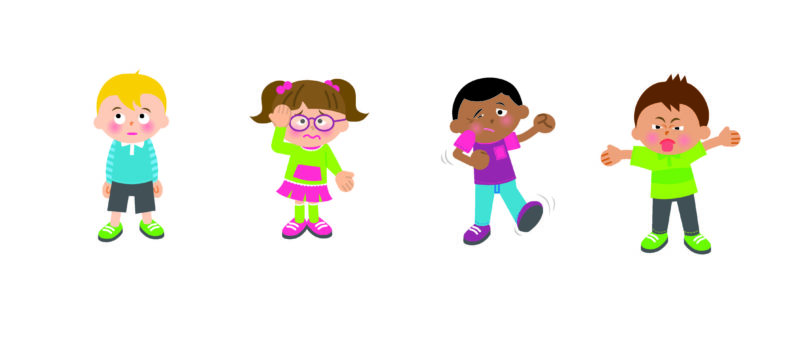
When people describe what seizures look like, they often assume that they only look one way – when a person falls to the ground, jerks, and is unconscious.
Some seizures certainly do look like that, but not all seizures have those same set of symptoms.
Seizure symptoms can present themselves in many different ways – from the grand mal type of seizure that I described above to ones that are more subtle, like staring and unresponsiveness.
That’s because seizures can start in any area of the brain, and the symptoms you see reflect where the seizure is occurring in the brain. For instance, if a seizure starts in the area of the brain that is responsible for sensation, your child will likely feel tingling.
It’s important for families to identify what symptoms their child may be having and when, because keeping track of seizures can be helpful for parents and caregivers to determine any potential triggers and patterns. And if your child’s health care team understands how often and when seizures are happening, they can make sure your child is prescribed the right medicine at the right time and at the right dose. (Read a previous post about tracking seizures)
HERE ARE SOME DIFFERENT SYMPTOMS OF SEIZURES:
STARING AND UNRESPONSIVENESS

Staring is one of the more common symptoms that we see in kids. They are usually also unresponsive and stop what they’re doing. But they can also have automatic movements of their hands and mouth or blink their eyes.
CONFUSION

It’s not very common for a child to have confusion and no other seizure symptom. Typically there is another symptom that goes along with it, like stiffness of the muscles or jerking of one part of the body. And it’s important to note that kids may be confused after a seizure takes place.
JERKS AND TWITCHES

These are quick muscle jerks of an arm, leg or the whole body. If your child is holding something at the time of the seizure, he might drop it or throw it.
UNUSUAL SMELLS

This symptom may happen along with abdominal pain, a bad taste in your child’s mouth, or feelings of déjà vu. It typically happens in relation to a temporal lobe seizure and can present as an aura, or a warning sign before any jerking or loss of consciousness.
WANDERING

When a seizure starts, some kids will continue doing what they were doing before the seizure started but without a clear purpose, even if they were walking. But they won’t be aware of what they’re doing and they’ll be unresponsive and might stare off. And it will look different than normal walking.
FALLING

This symptom isn’t typical for otherwise healthy kids. For kids who have seizures with another health condition, such as delayed development, it’s more common. They’ll lose all muscle tone and fall to the ground.
PICKING OR LIP SMACKING

This symptom often happens along with wandering. It’s a repetitive and automatic movement that doesn’t appear to have any purpose. They may be repeatedly picking at their clothes or the air.
TINGLING, NUMBNESS, OR FEELINGS OF ELECTRICITY

This can happen in any part of the body, by itself, or often times with another symptom.
It’s important to note that just because your child is having one of these symptoms, it doesn’t necessarily mean that she is having a seizure. However, if your child has a history of seizures, paying close attention to these more subtle symptoms can help your health care team be better informed about the type of seizures that your child might be having. Or, if your child has never had a seizure before and you notice a pattern of these types of symptoms, it might be worthwhile to schedule a visit with a neurologist.
Have questions about seizures or our New Onset Seizure Program? Call us at 513-636-4222 or request more information here.





Hi,
Thanks for sharing such valuable information on Epilepsy conditions in children. This is very useful for people willing to follow this diet.
Thanks!
Hi I was very interested in the information you provided about seizures and how each child and their onset occurred!