
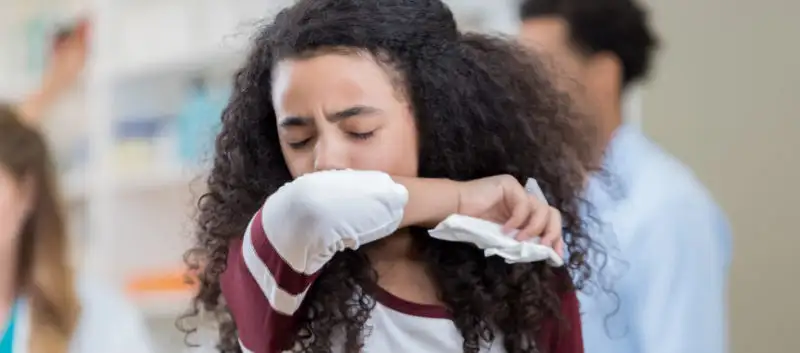
Have you heard the term walking pneumonia and wondered, What in the world?
Walking pneumonia is a common illness in children. You may also hear your doctor refer to it as atypical pneumonia. It is an infection of the lungs, but tends to be a less serious form than typical pneumonia.
Kids who have walking pneumonia often look pretty good. Instead of being sacked out on the couch, they’re up and walking around—that’s where the illness gets its name. However, it is caused by a bacteria, Mycoplasma, and it often needs antibiotic treatment in order to clear it up.
Frequently Asked Questions About Walking Pneumonia
Here are the questions I most often answer about walking pneumonia:
1. What are the symptoms?
Symptoms are usually fairly mild and can include a low-grade fever, fatigue, headache, sore throat, rash, coughing and wheezing. The symptoms can vary from child to child, and are often similar to those of a respiratory virus. The main thing that persists is the cough. Typically, in about 10 days, most viruses have resolved, or have improved significantly. For kids with walking pneumonia, the cough persists, which is often what brings families to the doctor’s office for a visit.
2. I thought it was just a cold!?
Walking pneumonia can be tricky. The symptoms are so similar to a virus that it’s often thought to be a virus. Because kids who have it might be up and about, parents frequently don’t realize that their child has pneumonia. I talk to a lot of parents who feel guilty after we determine their child has walking pneumonia. Please don’t feel guilty. The symptoms of walking pneumonia so closely match symptoms of a virus, that the two are hard to tell apart at home.
3. How is it diagnosed?
The majority of the time, we can diagnose walking pneumonia during a clinical exam. When we listen to the lungs, we can hear a distinctly different sound in a child with walking pneumonia versus a child with a virus. It often sounds like crackles in the lungs. Sometimes a chest X-ray may be ordered to diagnose walking pneumonia, but a physical exam is usually all that is needed. It is possible to test for mycoplasma on a respiratory viral panel, but these can often be expensive and not necessary if the symptoms follow a typical pattern.
4. How do you treat walking pneumonia?
Because this is a bacterial infection, it is treated with antibiotics. Azithromycin works the best for this type of pneumonia. It’s important to note that even after you’ve started the antibiotics, it can take a few more weeks for your child’s cough to completely go away.
5. How does a child get it?
Through the spread of germs. The main bacteria that causes walking pneumonia is Mycoplasma. Mycoplasma can cause several other conditions in children, including pharyngitis and upper respiratory infections.
6. Can it be prevented?
The best way to prevent walking pneumonia—as with all infections—is with regular, consistent hand washing. You’re probably tired of telling your kids to wash their hands, but there are good reasons for it, and infection prevention is a big one.
7. When is my child most likely to get walking pneumonia?
It is most common in kids ages 5-15, but the Centers for Disease Control has reported an increase in cases of younger kids this year. Further, it is often spread around large groups, such as in schools and camps.
8. Is there a time of year when it’s more common?
We tend to see infections more frequently in the summer and early fall. However, bacterial infections caused by Mycoplasma have remained high in the United States this year since the late spring.
9. When should I call the doctor?
Call your child’s pediatrician:
-
- If your child has a cough or cold that hasn’t improved for 2 weeks.
- If your child has had a fever for more than 3 days.
- If your child is complaining of shortness of breath or chest pain.
10. How can I help my child recover?
Bodies need time and rest to heal. Allow kids with this illness to scale back on their activities and make sure they get plenty of rest and fluids. Don’t use cough or cold medications to treat walking pneumonia. They’ve not been shown to be effective. Acetaminophen and ibuprofen are fine to use for aches and pains and to bring down fevers. Have your child with walking pneumonia practice healthy habits including washing hands and covering coughs to help prevent others in the family from getting sick.



Great information, Dr. D.!!