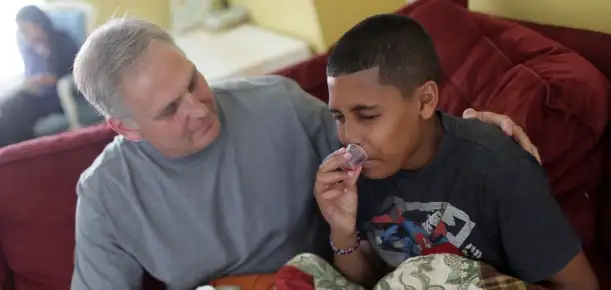

When your child has a fever, it can really make them feel bad. Here are some tips to help you get your child on the path to feeling better again.
When to Call the Doctor
If your child is acting and/or looking sick, ask yourself these questions:
- Does your child have a fever? Don’t rely on testing your child’s forehead with your hand. Use a thermometer to take your child’s temperature.
- How sick is your child acting? Do they look like they usually do, or are they looking pretty rundown?
- What other symptoms does your child have—sore throat, rash, runny nose? Those other symptoms always play a big part in a doctor’s ability to figure out what’s going on with your child.
Use the answers you come up with to help gauge how ill your child is. If your child has a fever and looks sick, call your pediatrician. Note the time you took your child’s temperature, what the temperature was, and how you took it—rectal (bottom), oral (mouth), axillary (armpit), or another method.
This table can help you decipher when to call your doctor’s office about a fever:
Note: This applies only to children 2 months of age and older. If an infant less than 2 months of age has a rectal temperature of 100.4°F or higher, call your pediatrician immediately as this is considered a medical emergency.
| For kids these ages: | I’d want to see them in my office at this point: |
| 3 years and under | Fever for two days and it’s not going away |
| 3 years and older | No other symptoms but have had a fever for three days or more |
| Any age | Fever is still present on day six, even if you’ve already been to the doctor during those six days |
The purpose of fever-reducing medicine is to keep kids comfortable. You don’t need to give your child medicine just because they have a high temperature if they are otherwise getting along OK. But if a fever is wiping your child out, giving medicine is fine.
Giving Fever Medications to Your Child
Keep in mind these important instructions regarding age and medication type:
| For babies these ages: | Use this type of medication: |
| 2 months – 6 months | Acetaminophen (Tylenol) |
| 6 months and older | Acetaminophen (Tylenol) OR Ibuprofen (Advil, Motrin)* |
Here are a few other tips regarding medicine for fevers:
- When giving your child a fever-reducing medication, choose either acetaminophen or ibuprofen. Don’t alternate the two, as this increases the risk of dosing errors.
- If your child is sick and sleeping, don’t wake them up to give medicine. It’s more important for them to rest.
- Medications won’t cure your child’s illness. About four to six hours after giving a fever-reducing medicine, expect the fever to return. Continue using the medicine as needed.
- The overwhelming majority of fevers in kids are caused by viruses and do not need antibiotics.
- It’s OK to give your child acetaminophen or ibuprofen before an appointment with your doctor. Don’t withhold medicine from a child who needs it to show the doctor how bad your child is feeling; we’ll be able to gauge how sick they are based on their other symptoms.
Remember that all medicines can be poisonous if too much is taken. Follow the instructions on the label. Be sure to keep all medicines out of the reach of children at all times. Always check with your pediatrician for the appropriate dosage for your child.
Time-tested Ways to Help Your Child Feel Less Icky
- Sponge baths often help a child with a fever feel better. Put your child in a tub of lukewarm water. Wet a washcloth and rub it gently over your child’s skin. Don’t make the bath water cold. That leads to shivering, which can drive up body temperature even more.
- Dress your child in light clothing. Resist the urge to bundle them up in a cozy blanket.
- Make sure your child drinks lots of fluids. Our body’s fluid requirements go up when we have a fever.
Remember that you and your doctor know your child’s health best. If you’re ever concerned about a fever in your child, give your physician a call.