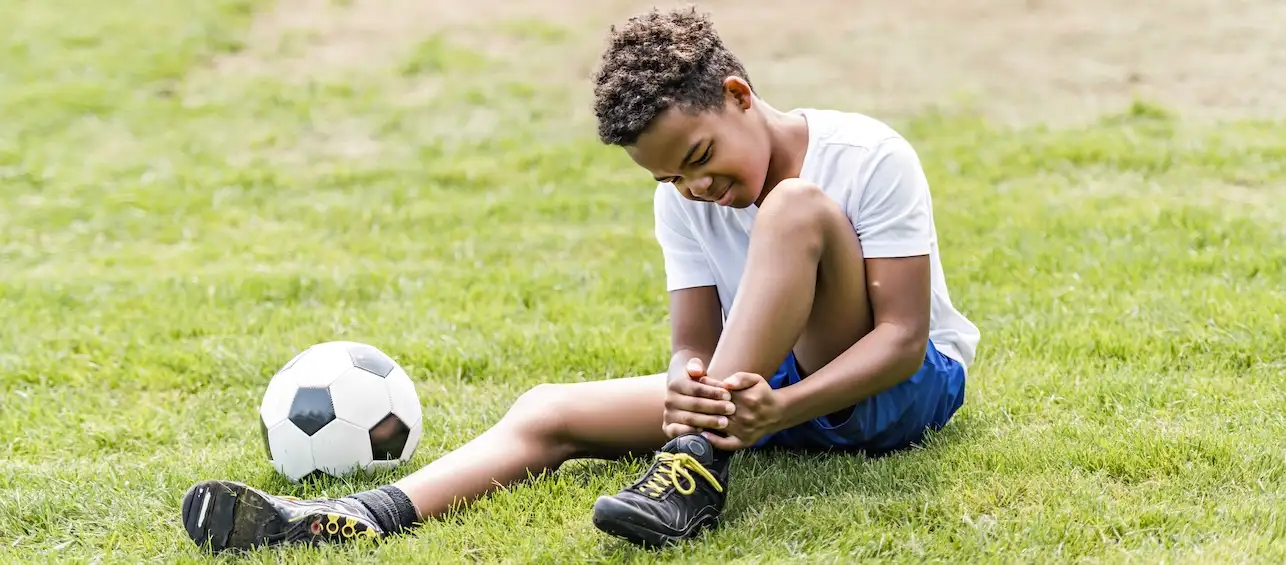
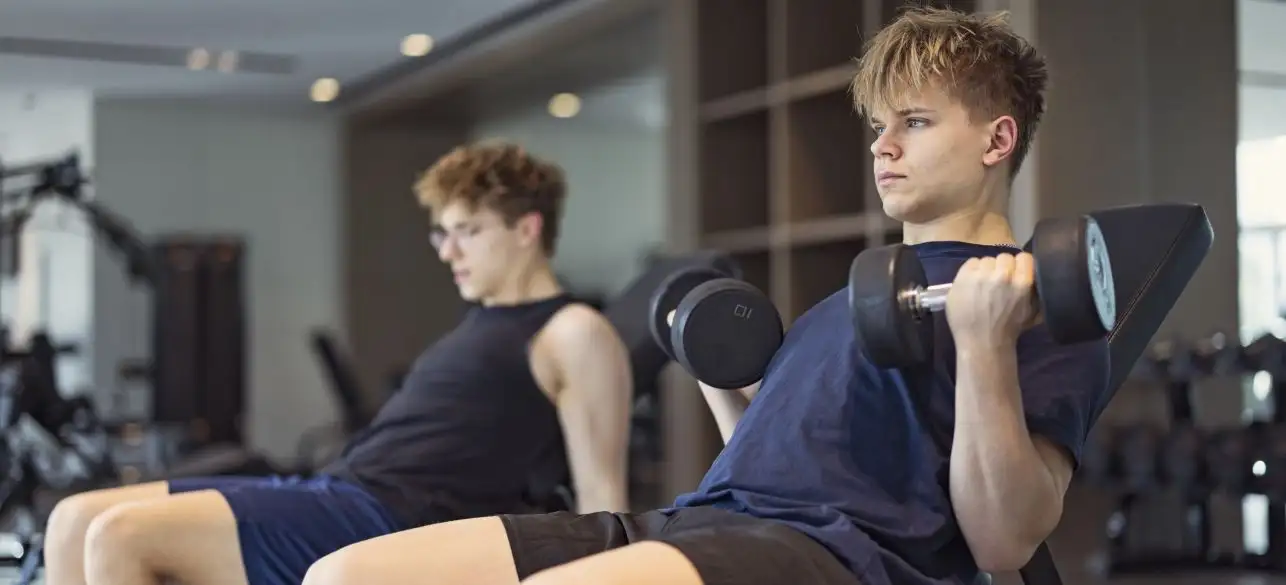
If your child has shown an interest in strength training you may wonder where to start and how to keep them safe.
There is not one single program that is right for every child. Every child has different interests and needs. A safe youth strength program should be built around their:
- Experience level
- Physical development
- Ability to perform exercises safely
- Goals
When first starting, the goal should not be to see how much weight a child can lift. It should be to learn good movement, build control and gradually progress from there. As a pediatric physical therapist who works with young athletes, here are some steps I recommend to parents when choosing or starting a strength training program for their kids:
1. Determine That They’re Ready
Readiness is more important than a specific age. Consider whether your child can follow directions, pay attention to instruction, and is mature enough to participate in a structured environment.
Physically, kids should have adequate balance, coordination, and body awareness to learn and perform basic movement patterns with good technique.
2. Choose the Right Coach
The person teaching your child matters. While there isn’t one specific certification required for someone to work with youth athletes, you can look for recognized strength and conditioning certifications and their experience working with your child’s age group. Certifications through these organizations can provide a strong foundation in exercise programming and safety:
- National Strength and Conditioning Association (NSCA)
- American College of Sports Medicine (ACSM)
Further, a good youth strength coach should understand how children develop, know how to modify exercises for different skill levels and be able to teach proper mechanics. Here are some questions you can ask them before signing your child up:
- How do they decide when an athlete is ready to progress?
- How do they handle injuries and pain?
- What does supervision look like?
3. Observe a Class
There is no national registry that identifies safe youth strength training programs, so parents have to do some homework. Programs connected with reputable sports medicine centers, children’s hospitals, or facilities experienced in working with young athletes may be a good place to start. I recommend watching a class before signing up.
A well-run class looks like:
- An active coach who observes the athletes, gives feedback and steps in when necessary.
- A lower teacher-to-athlete ratio. There isn’t a universal ratio because it depends on an athlete’s age, experience and complexity of exercises. Lower ratios are better for younger kids.
- Athletes are challenged but kids should look comfortable, engaged and supported.
- The participants are having fun.
Red flags to watch for:
- Poor supervision.
- Athletes regularly using poor technique.
- The same workout given to every athlete regardless of different abilities.
- Pressure to increase weight quickly.
- Focusing on lifting heavy weights rather than proper movement and form.
- An environment that feels overly intense.
4. Begin with movement, not weight
For a child who is new to strength training, the first step is learning how to move correctly. Body weight exercises are often a good starting point. Once they demonstrate control and good technique, they can gradually introduce resistance bands or light weights.
Important to know: starting strength training does not mean having to start with a barbell!
5. Make Technique the Measure of Progress
One of the biggest mistakes in youth strength training is thinking that progress means continually adding weight. Instead, an athlete should first show that they can perform the movement with good technique and control the resistance through the exercise. If adding weight causes their form to break down, they should not progress.
Key point: Progress can also mean improving control, balance, consistency or movement quality.
6. Consider their other activities
Often children who want to start strength training are also playing sports. Consider how many games, practices and clinics they have each week. Also think about their age, experience, goals and activities. In general, consistency is more important than training every day. For most kids, 2-3 strength training sessions per week is a reasonable starting point.
Rule of thumb: A kid’s total hours of training each week shouldn’t exceed their age. It’s not a hard-and-fast rule but it can be helpful to make sure kids have enough time for recovery and other activities.
7. Know When to Back off
Increasing intensity is not always the goal. Sometimes the safest decision is to maintain the current level or decrease training, particularly during a busy sports season, a growth spurt, or period of fatigue.
These can be signs that the overall workload is too high:
- Persistent pain.
- Frequent injuries.
- Excessive fatigue.
- Declining performance.
- Trouble recovering between workouts.
- Noticeable loss of enthusiasm for sports and training.
The Bottom Line for Parents
There is a lot of information out there and it can be overwhelming for parents to sort through. Every kid is different and what works for one athlete may not be appropriate for another. It’s okay to ask questions and take time to understand how a program approaches strength training, progression and safety.
Strength training can be a great tool for kids when it’s done appropriately, and we’re always happy to help families navigate those decisions.
To learn more about our weightlifting clinic, email weightlifting@cchmc.org or call 513-636-7333.