
When your child has a new health diagnosis or needs to be hospitalized, the whole family is affected, siblings included.
You as a primary caregiver will likely be away from home more than usual. Another family member or friend may begin to manage getting your other children to their activities, making dinner and helping with homework. These changes in routines are significant for a child.
What Your Child at Home May Be Feeling
Family routines and rituals are greatly interrupted when a child is in the hospital. The siblings at home can experience a wide variety of feelings when this happens. They might go through any of the following:
- They may not be exposed to medical information, so they aren’t always “in the know.” They may be scared, or they might come up with their own ideas of what’s happening.
- They may feel lonely. Many siblings share a close bond, or maybe they even share a room, and now that room is empty. They also may feel isolated from you.
- They may have regressive behaviors or mood changes, or other reactions related to major life changes.
- They are navigating peer relationships and being at school where kids or adults might ask them how their sibling is doing.
- They may seek extra attention and reassurance.
- They may be feeling overlooked as the attention is focused on the child in the hospital. They may feel like their identity has been reduced to their sibling role.
Strategies to Use When Your Child’s Sibling Is in the Hospital
At Home
- Keep routines and schedules as similar as possible. Allow your kids to engage in their usual activities, such as school and extracurriculars, as much as they can. This maintains a sense of normalcy.
- Prepare your child when there is change in their routine. Cover basic care questions like who is going to be with your child at home in the morning, who is going to drive them to soccer, and so on.
- Encourage emotional expression through creative activities. This might include writing, art or music.
- Encourage them to keep playing and having fun. Play is important for all children, especially in times of stress.
- Set limits and discipline them just like you did before their sibling became ill. This helps them know what to expect. Letting all rules go makes kids uneasy.
- Give them purpose. Creating chore charts or other jobs/tasks for the sibling gives them ownership and a sense of control. Try having them draw pictures to decorate the sibling’s hospital room.
- Carve out “special time” together. Even if it’s only five minutes, providing focused one-on-one quality time will help the sibling feel seen, heard, valued, and supported.
At the Hospital
- If possible, have the sibling come visit your child in the hospital. This can help keep their imagination from taking over.
- Call when you can. Having a one-on-one conversation with your child who is at home can help them feel special. Try creating a ritual such as telling each other the highlight of your day, or have a goodnight routine over the phone.
- Send them a note. Whether it’s digital or on paper, let your child at home know you’re thinking about them.
- Try to find a compromise. This might be eating dinner together one night a week, reading a story together before bed, or having family movie night in the hospital room.
6 Ways to Offer Emotional Support to Your Child at Home
- Acknowledge and validate your child’s feelings. Be genuine; don’t try to fix the problem to make the emotion go away.
- Talk openly as a family about emotions and provide a safe space for them to have these conversations. Try statements like, “I feel ____ when ____ is in the hospital. How do you feel?”
- Be honest in a way that is age appropriate. Explain things so your child can understand. They may ask the same question a few times; this is developmentally appropriate and to be expected. Try to offer patience with their questioning.
- Reassure the sibling that they did not cause this. Let them know they did nothing wrong for their sibling to get sick.
- Be understanding of the sibling’s needs. Try not to get upset when regressive behaviors or mood swings occur. Allow the behavior, within reason, and offer comfort.
- Encourage your child’s unique identity. Compliment their special traits, skills and abilities.
Let Us Help You
As the primary caregiver of a child in the hospital, you have a lot going on. Supporting your children in two different places requires a lot of energy. At Cincinnati Children’s, you can let us help carry that load.
We offer support to siblings of kids in the hospital in several ways:
- Through our Child Life Specialists. Our Child Life staff members offer emotional support to the whole family. One of our main roles is providing sibling support. If you feel your child could benefit from sibling support interventions, reach out to your unit’s Child Life Specialist.
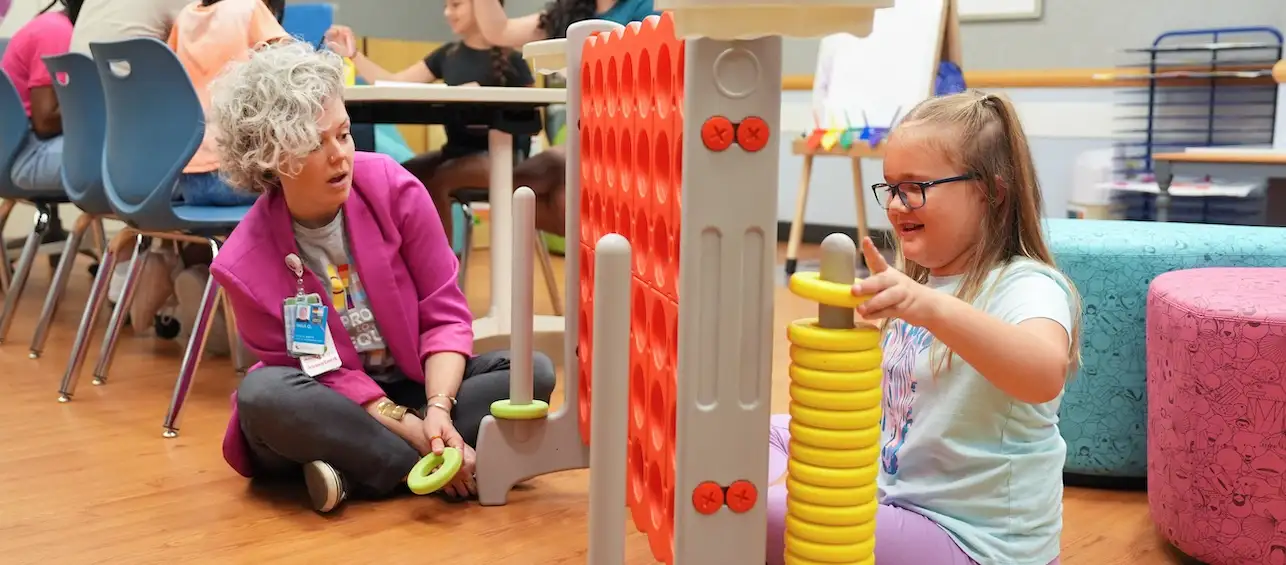
- With our Sib Club. This club is for siblings of hospitalized children and features activities and games allowing kids to relax in a fun atmosphere. It meets weekly in our Family Resource Center and monthly at the Ronald McDonald House.
- In our Sibling Center. This space gives kids a break from the hospital setting. As a dedicated place for siblings of patients at Cincinnati Children’s and children of adult patients, it’s designed to lower anxiety related to having a family member in the hospital. The center offers a spot for siblings to decompress and have fun.
- At our annual Sibling Symposium. This event takes place once a year for siblings ages 7 and older and their parents. It’s a supportive social and educational event that allows kids to meet and connect with others who also have siblings with complex health needs and developmental disabilities.
We understand how hard it is to have a child in the hospital and we want to help however we can. For more information about any of these opportunities, ask anyone on your child’s care team to connect you with someone in our Child Life Program.