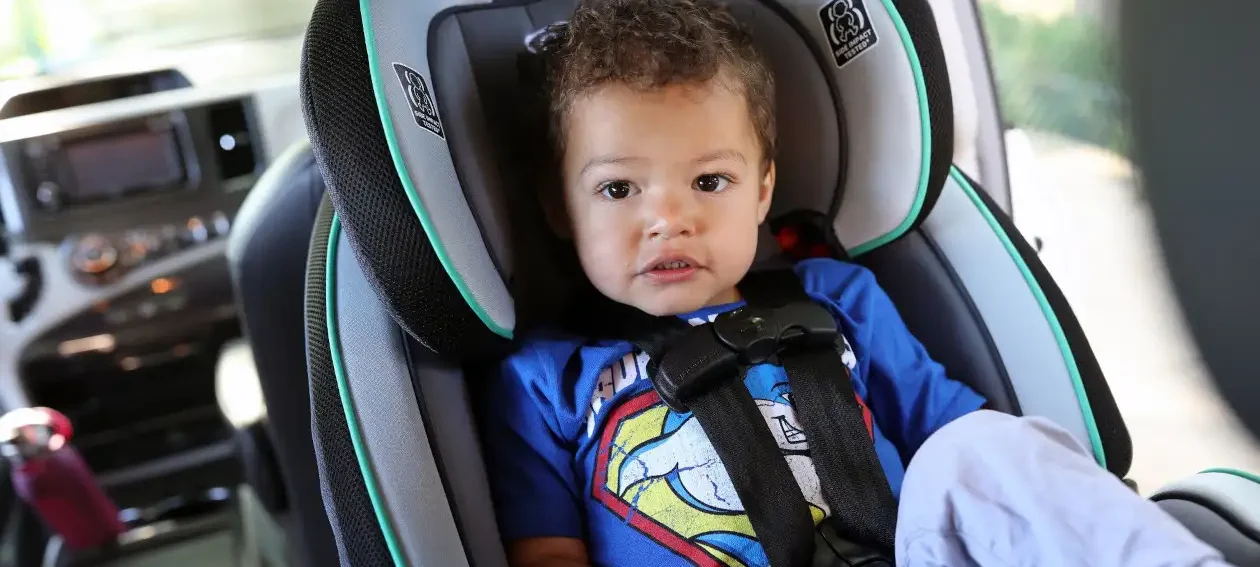
Parents purchase many safety items for their kids in the early years, such as a crib, cabinet locks and baby gates. At the top of that list are car seats, as they are needed through most of elementary school.
If you’re currently in the market for a car seat or you’ve just purchased one, I’d like to warn you about a concerning trend: counterfeit or non-approved car seats. They may look like the real thing, especially in pictures online; but when evaluated in person, they are made with inferior materials that make them unsafe.
Here’s how to evaluate a car seat to avoid purchasing a counterfeit one.
How to Avoid Purchasing a Counterfeit Car Seat
1. Inspect for design flaws.
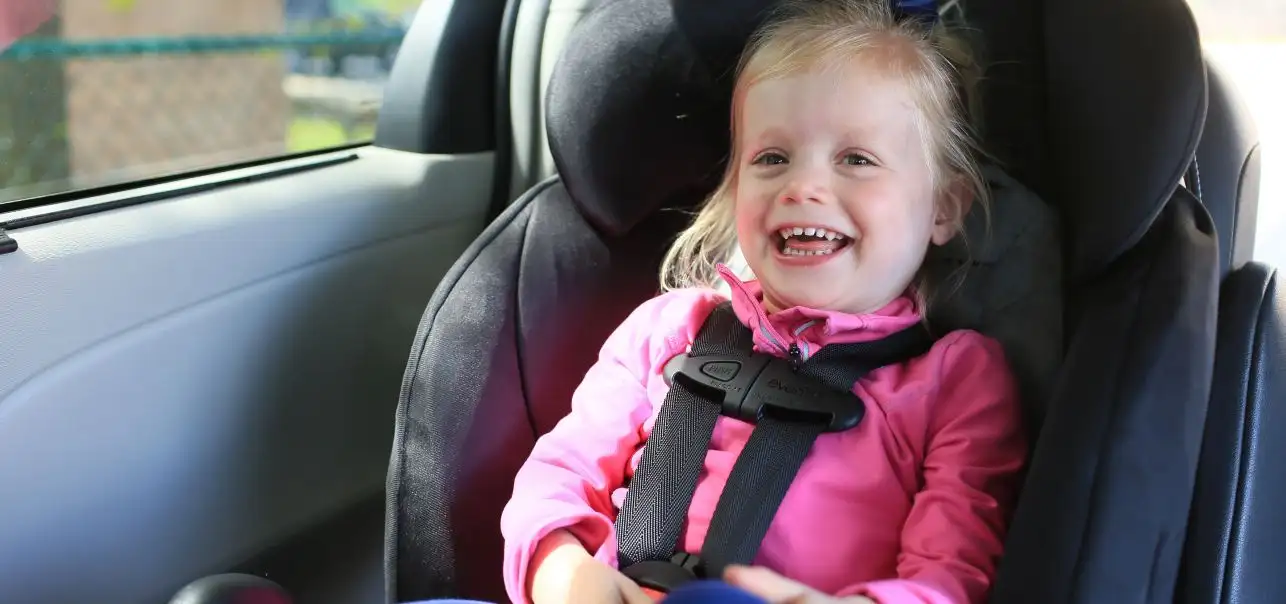
- Look closely at the chest clip. Federally regulated car seats manufactured in the United States for infants and toddlers are required to have a five-point harness. While federal regulations do not require that seats have a chest clip, currently all seats approved in the United States do have one.
If the car seat is missing a chest clip, it is non-approved.
- Check for hip straps. Car seats must have both shoulder straps and hip straps. If the car seat is missing hip straps, it is non-approved.
- Look closely at the plastic. Some fake car seats are made with flimsy plastics that can be easily bent.
2. Look for labels.
The most important label to look for is the one that states, This child restraint system conforms to all applicable Federal Motor Vehicle Safety Standards. This means that the car seat is federally compliant.
There is also labeling with specific height and weight requirements. Non-approved car seats may:
- Have labels with grammatical errors
- Have a label that shows only pictures with no words
- Be missing a label altogether
3. Check for paperwork.
Federally regulated car seats will include a registration card (see #4 below) and safety manual that come attached to the harness. If these items are missing, the seat is likely non-approved.
4. Register it.
Like many child safety products, authentic car seats come with a unique serial number. We have heard of some non-approved car seats using false numbers or previously registered numbers.
If you have already purchased a car seat, register it with the National Highway Traffic Safety Administration (NHTSA). The website will confirm or not confirm the number. An unconfirmed number means it is likely counterfeit.
Registering will also allow you to receive important information in the event of a product recall.
5. Purchase brand names.
The best way to avoid purchasing a fake car seat is to go to a store and inspect it for the above features. You will find name brand car seats in brick-and-mortar stores and can use the information to buy and ship directly from the manufacturer, if you still want to purchase online.
Avoid purchasing a car seat from a third party. They may be selling car seats with unfamiliar names, or faulty car seats using well-known car seat manufacturer names.
If you have concerns about your car seat, you can always take it to a child passenger safety technician to have it evaluated.
If you find that you have already purchased a fake car seat, stop using it immediately. I recommend trying to return the item and then notifying the retailer that it is a counterfeit. If they will not accept the return, or if they refund it but don’t want the item back, cut the straps and throw it away. If you purchased the item with a credit card, you can also try to dispute the charge through your credit card company.
Car seats are an expensive investment in your family’s safety. Do your research up front to make sure you get a quality product when you make your purchase.