Cincinnati Children's Blog
  • Y&H Podcast
  • Newsletter Subscribe
  • CincinnatiChildrens.org
  • Contact Us
  • Blog
  • Healthy Living
  • Rare and Complex Conditions
  • Safety and Prevention
  • Heart Conditions
  • Learning and Growing
  • Research and Discoveries
  • Blog
  • Healthy Living
  • Rare and Complex Conditions
  • Safety and Prevention
  • Heart Conditions
  • Learning and Growing
  • Research and Discoveries
  • Y&H Podcast
  • Newsletter Subscribe
  • CincinnatiChildrens.org
  • Contact Us
HOME/Safety and Prevention/How Early Can Kids Learn First Aid, CPR and Bleeding Control Skills?

How Early Can Kids Learn First Aid, CPR and Bleeding Control Skills?

How Early Can Kids Learn First Aid, CPR and Bleeding Control Skills?
August 16, 2023
Cindy Chang, MD
0 Comments

The short answer is: earlier than you probably think! Kids can save lives, just like adults. Some of the simplest skills, such as calling 911, can be taught to preschoolers. And studies have shown that children as young as nine can learn and retain cardiopulmonary resuscitation (CPR) skills.

Having conversations around emergencies, bleeding and CPR can make kids understandably worried, but gaining these skills may help them feel empowered to respond and help a friend or loved one. Here are the skills they can learn:

Kids Can Learn Valuable First Aid Skills

Injuries can happen anywhere – outdoors, in the home, at school – and kids can often be the closest person to the one who is injured. Learning first aid skills can help prevent further injury or even save the life of another person. Kids can learn how to dial 911, what constitutes an emergency, what is inside a first aid kit, how to recognize if a person is not breathing or acting normally, and how to care for minor bleeding wounds.

Kids Can Administer CPR

Currently, CPR training is a high school graduation requirement in 43 states, but studies have shown that kids as young as nine can learn and retain CPR skills. When initiated early, CPR can double or even triple the chances of someone surviving cardiopulmonary arrest while waiting for first responders to arrive.

According to the American Heart Association, more than 350,000 cardiac arrests occur outside of hospitals each year, with the majority of them happening at home or in public settings. This means that your child could even help you or a family member!  

Kids Can Learn How to Control Bleeding

Trauma is the leading cause of death for Americans under the age of 45 and uncontrolled bleeding accounts for 50% of preventable deaths. Learning how to apply constant pressure or using a tourniquet can save a life.

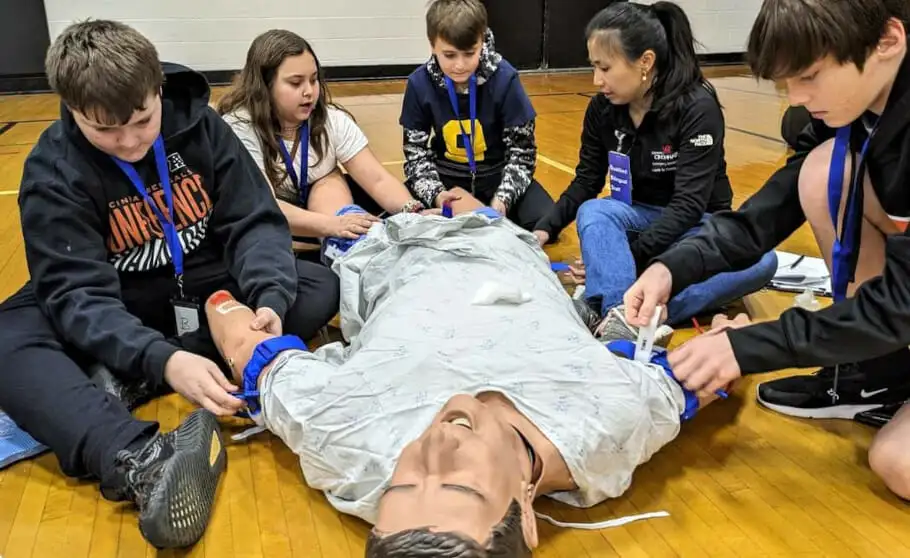
However, there are currently no specific guidelines around what age is appropriate to teach bleeding control skills to children. That said, at Cincinnati Children’s we have successfully trained almost 500 students ages 8-14 from the Oak Hills Local School District on bleeding control skills and CPR. We are currently studying the youngest age children can learn how to apply a tourniquet for bleeding control.

Where to Learn

Children are so eager to learn, and the best part is that they will likely want to teach their friends and family members the life-saving skills that they’ve gained. So where and how do you start? Check out the following organizations to learn more about their public education programs and associated age requirements:

American Heart Association CPR & First Aid 
Red Cross Training | Take a Class | Red Cross 
Project ADAM National
Project ADAM Greater Cincinnati
STOP THE BLEED – Save a Life | Stop The Bleed 

Related Articles
Supporting youth in developing a healthy body image
Is It Bronchiolitis? Signs, Symptoms, and When to Seek Care 
Bronchiolitis: A Parent’s Guide to One of the Most Common Winter Illnesses
Understanding the Updates to the CDC Childhood Vaccine Schedule
TAGS:
  • Home
Cindy Chang, MD
About the author: Cindy Chang, MD

Cindy Chang, MD is a pediatric emergency medicine fellow at Cincinnati Children’s and a clinical instructor of emergency medicine at University of Cincinnati. She is a board-certified general emergency physician and she completed her residency training at Los Angeles County-Harbor UCLA. Her area of interests include medical education, pediatric readiness, and health disparities.

Write A Comment

Leave a Reply Cancel reply

Your email address will not be published. Required fields are marked *

No Comments Yet

Topics

  • Cancer and Blood Diseases
  • Child Development and Behavior
  • Childhood Obesity
  • Chronic Care Networks
  • Cincinnati Walks for Kids
  • Featured Faces
  • Fetal Conditions
  • Fitness and Nutrition
  • Food Allergies
  • Ghana 2012
  • Health Care Public Policy
  • Health Care Quality
  • Health Care Reform
  • Healthy Living
  • Heart Conditions
  • Hospital Operations
  • Learning and Growing
  • Nurses Week 2012
  • Patient Family Experience
  • Patient Flow
  • Patient Safety
  • Pin of the Week
  • Rare and Complex Conditions
  • Research and Discoveries
  • Safety and Prevention
  • Share Your Story
  • Technology
  • The Young & Healthy Podcast
  • Uncategorized
  • Vaccines
  • Volunteerism
  • What's New
See All Topics
See Less Topics

Subscribe

Subscribe today to our family newsletter for tips, blog posts, podcasts and more.

Subscribe Now

Popular Posts

  • How to Help Kids Avoid Frostnip and Frostbite 705 views

  • Lean, Purple Drank, Sizzurp: A Dangerous Teenage Drink 549 views

  • 6 Questions to Ask When Your Child Complains of Chest Pain 493 views

  • Stuttering In Young Kids: When To Be Concerned 330 views

  • 7 Exercise Ideas to Keep Kids Active This Winter 291 views

  • 6 Tips to Help Kids Who Are Afraid of the Dark 248 views

About

The Cincinnati Children’s blog features thoughts and perspectives from our experts on all things pediatric health. This blog does not provide medical advice, diagnosis, or treatment. Learn More »

Contact Us
  • 3333 Burnet Avenue, Cincinnati, Ohio 45229-3026
  • 1-513-636-4200 | 1-800-344-2462
  • TTY: 1-513-636-4900
  • socialmedia@cchmc.org
Connect With Us
  • Newsletter Subscribe
  • CincinnatiChildrens.org
  • Contact Us

© 2009-2026 Cincinnati Children’s Hospital Medical Center